By The Schuylkill River & Urban Waters Research Corps Archive team
Images
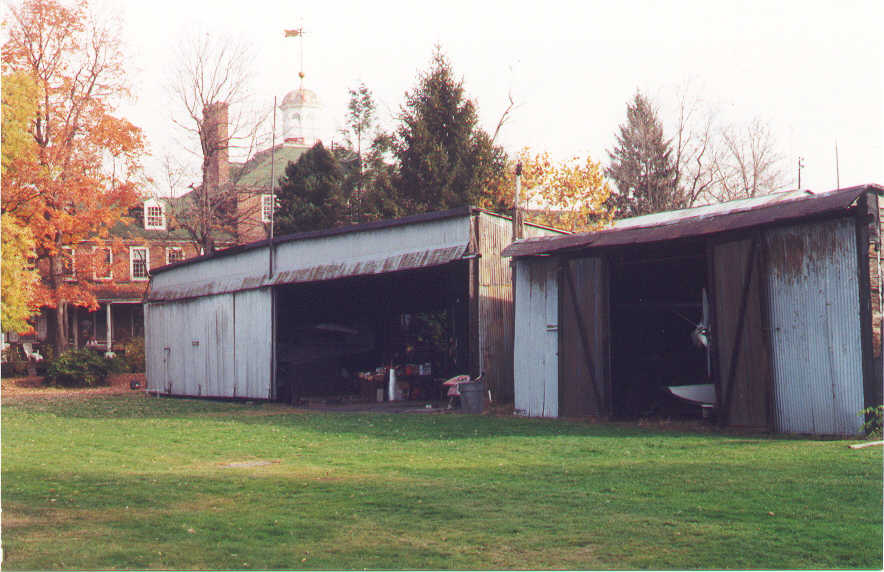
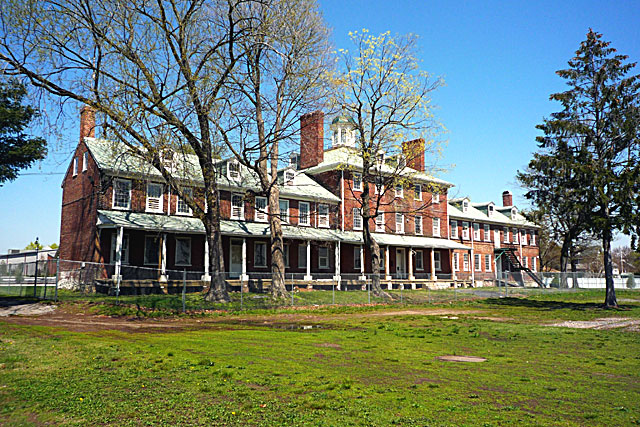
"The old man and the seaplanes": In 2000, the Inquirer Magazine published an article on the life and work of Robert Mills, who ran the Seaplane Base from the time his father died in 1940, shortly before he retired. The Seaplane Base website provided this and other articles about the Mills family and the base. ~ Source: Philadelphia Seaplane Base ~ Creator: Melissa Dribben for the Inquirer Magazine ~ Date: January 2000Photos of seaplane base hangers: Top left: Seaplane hangers photographed during the early 2000's. Bottom left: Main building of Lazaretto in 2009 with hangers removed. Top right: Side view of where the seaplane hangers used to be taken in 2018. The building pictured used to be part of the Lazaretto but is now owned by the Riverside Yacht Club. Bottom right: Turnstile rail between two rows of hangers. Picture from 2018.Photos of launch mechanisms in 2018: Top: Side (left) and front (right) view of dolly mechanism installed by army.
Bottom left: Trench along the riverbank. Part of the army's dolly mechanism.
Bottom right: Earthen ramp for launching seaplanes. ~ Date: August 8, 2018Untitled ~ Seaplane lands at Lazaretto : On August 3, 2018, an amphibious plane landed at the Philadelphia Seaplane Base in Tinicum Township to pick up a passenger. The landing dock extends from the historic Lazaretto property, which is undergoing restoration. The township has plans to resume seaplane activity when the restoration is complete. ~ Creator: Chris Templin ~ Date: August 3, 2018Newspapers report death of aspiring pilot at Essington: One of the first would-be pilots pursuing certification at the Essington aviation school dies when his plane crashes into the Delaware River. A wealthy resident of Philadelphia, Alexander Brown was known for his pursuits as a poloist. Numerous newspapers reported the event. ~ Source: Google Books ~ Creator: Meriden Morning RecordNewburgh JournalCayuga ChiefThe Evening Independent Warsaw Daily Times ~ Date: October 24-28 1916Fortifications Appropriations Bill 1919: In the 1919 Fortifications Appropriations Bill, Colonel Arnold is questioned about expenditures related to the aviation school at Essington during World War I. The allotment of funds for seaplanes versus land planes, the number and design of the seaplanes, and the training of pilots were addressed. ~ Source: Google Books: pgs 178-185 ~ Creator: 65th Congress, 2nd Session: Hearings Before Subcomittee of House Committee on Appropriations ~ Date: 1919"Stand By to Bomb Mouzon": An article about the adventures of Lieut. Gardner H. Fiske during World War I describes his training at the aviation school in Essington. At that time, the Army was operating the school. After Fiske's first two solo flights, which the author describes as "harrowing," Fiske was discouraged from pursuing a career in flying, advice which he ignored. ~ Source: Google Books ~ Creator: Lieut. James M. Richardson, D.S.C. for Popular Aviation, Vol. IX, No. 3 ~ Date: September 1931Marine Railway at Essington : A segment on permanent bases in a 1937 book on seaplanes mentions the Essington base as a prime example of a "true marine railway." The author describes the mechanism as a system of rails and trestles, to which a wheeled carriage is attached, which presumably refers to the Army's World War I installation. ~ Source: Seaplanes: Manuevering, Maintaining, Operating, pgs 13-15 ~ Creator: Daniel J. Brimm, Jr. ~ Date: 1937 Proposed layout for Lazaretto restorations : Plans for the historic Lazaretto property include repairs and modifications to the seaplane base and marina. ~ Source: Essington Seaplane Base ~ Creator: Herbert E. MacCombie, Jr., P.E.
Consulting Engineers and Surveyors, Inc.
Modifications by Robert Dant ~ Date: Created December 2011
Modified July 2014Hydroplane from 1919: A hydroplane used at the Essington Aviation School, 6-10-1919. Hagley ID 69170_13838, Box 349, Westinghouse Electric Corporation Steam Division photographs (Accession 1969.170), Audiovisual Collections and Digital Initiatives Department, Hagley Museum and Library, Wilmington, DE 19807 ~ Source: Westinghouse Electric Corporation Steam Division photograph collection ~ Creator: Photograph by Charles Yessel ~ Date: June 10, 1919
Walt Ellis points out various features of the Lazaretto property relating to the seaplane base. Ellis remembers how the Mills brothers Bob and Bill lived in the main building. Bob operated the seaplane base on the right side of the property facing... View File Record
Walt Ellis describes seaplane launching mechanisms
Walt Ellis describes two different mechanisms for moving planes between water and land. The first was installed by the army during its operation of the base in World War I. The system of ramps, rails, and cables, remnants of which can still be seen,... View File Record
Walt Ellis muses on why an amphibious plane would choose to land in the Delaware River at Essington instead of on a runway at the nearby Philadelphia Airport. Ellis points out that the traffic at an international airport would likely result in... View File Record
Walt Ellis explains the necessary considerations to land a seaplane in proximity to an active international airport. So long as seaplanes observe Philadelphia Airport's controlled airspace, they can fly in and out of Essington without communicating... View File Record
Under the sponsorship of a few wealthy Philadelphians, the Lazaretto property in Essington was converted to a seaplane base in 1915. After World War I, Frank Mills, one of the original pilots at Essington, acquires a lease of the property and opens a flying school. By the time Frank's son Bob Mills takes over operation of the base from his father in 1940, the Mills are in possession of the property. Other than a 4-year closure during World War II, Bob Mills runs an aviation school at the Essington Seaplane Base until 2000. The base is currently owned by Tinicum Township, whose efforts to restore the historic Lazaretto property include plans for improving the seaplane base.